
Remnants is an exploration of land, memory and belonging. Through surreal painting, sculpture and fibre art, the exhibition weaves together flora, fauna, and ornate objects to examine the impact of introduced species and the delicate threads connecting us to place
Remnants
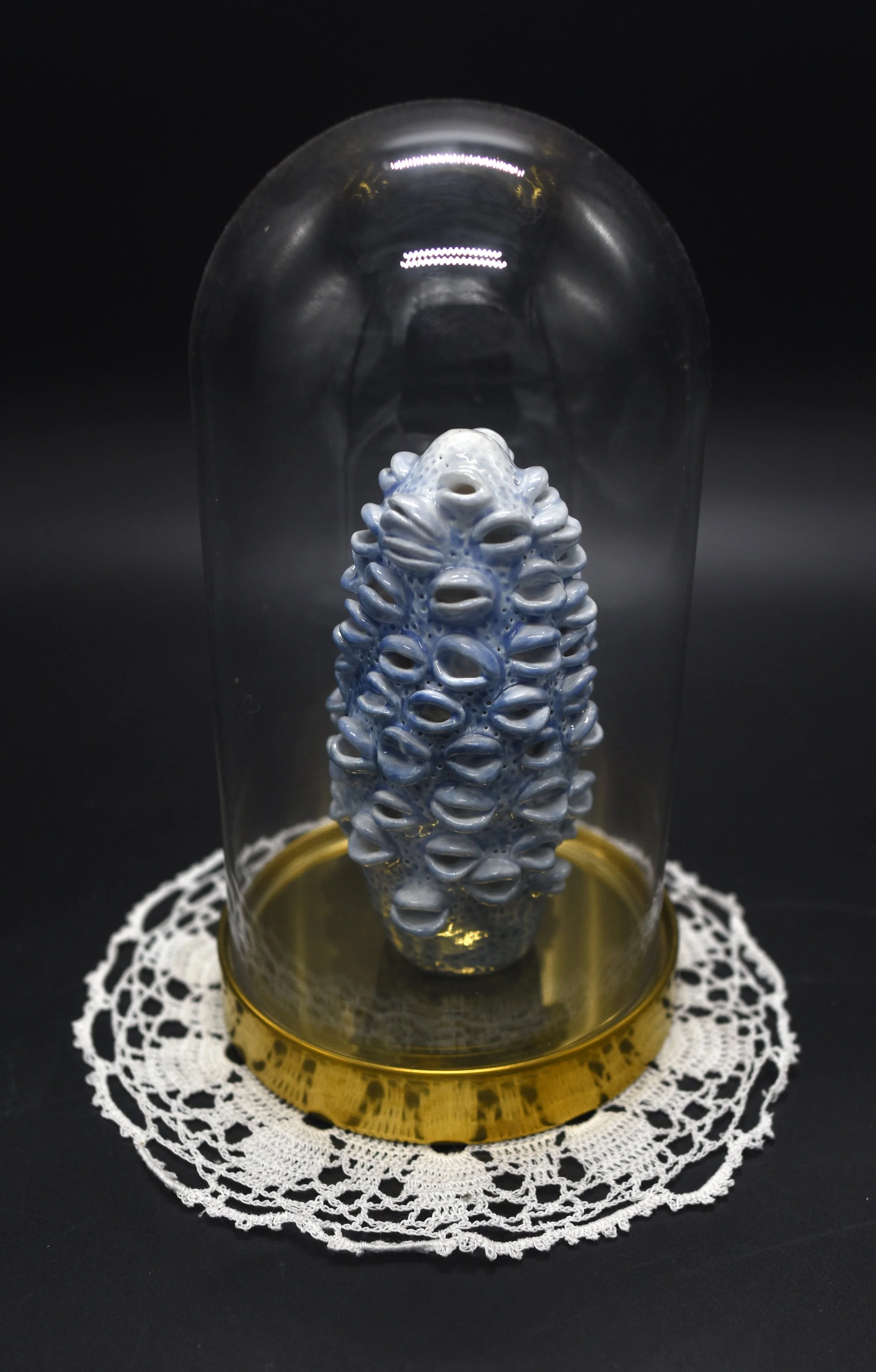
Banksia Blue 2026 - The significance of blue lies in its historical and cultural ties to trade and empire building. The colour blue was associated with naval uniforms symbolising authority and the maritime power of the British. Blue pigments, particularly indigo, were crucial for European exploration and trade. This pigment was sourced from regions like India and Afghanistan, which were integral to expansion.
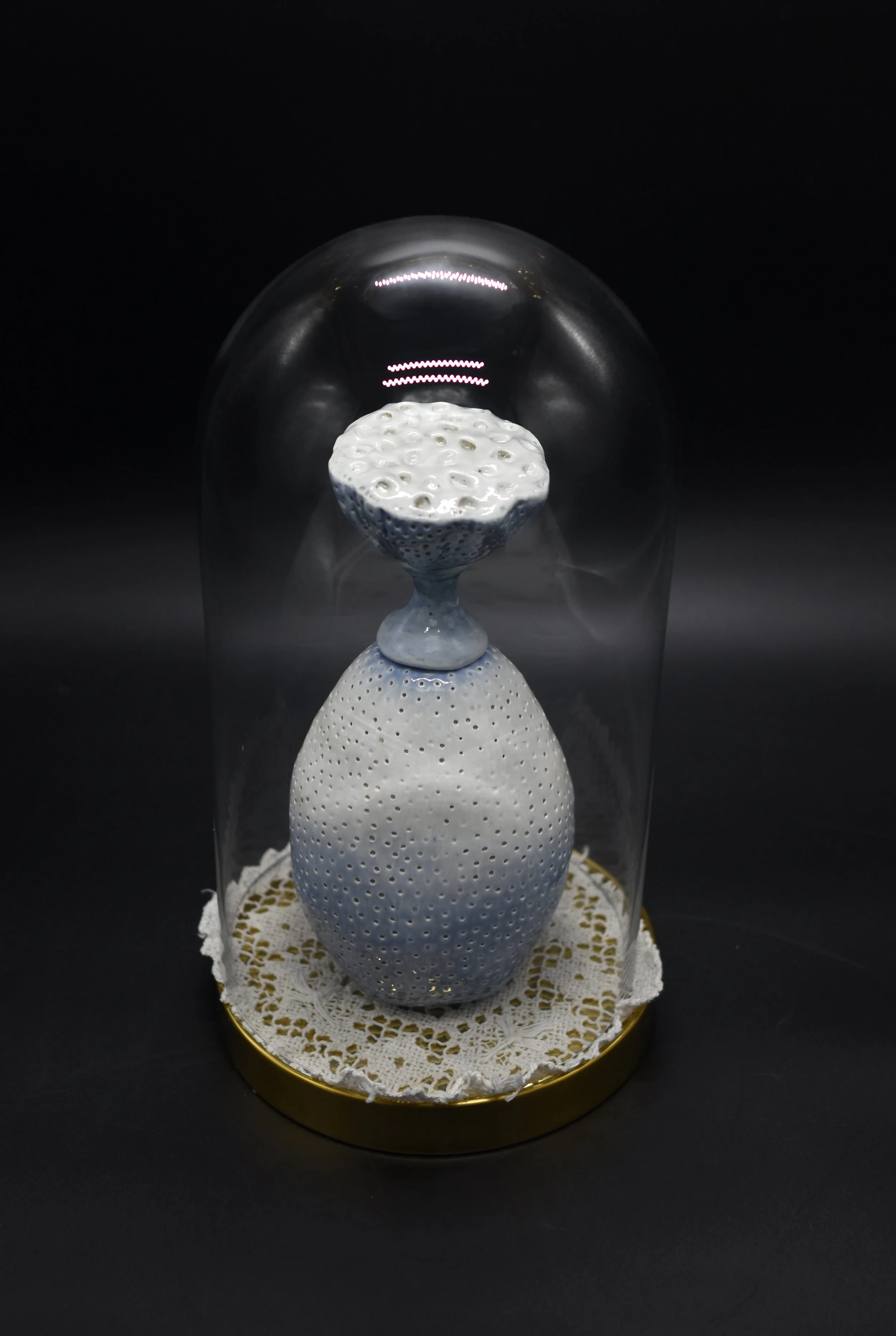
Sacred Lotus 2026 - The significance of blue lies in its historical and cultural ties to trade and empire building. The colour blue was associated with naval uniforms symbolising authority and the maritime power of the British. Blue pigments, particularly indigo, were crucial for European exploration and trade. This pigment was sourced from regions like India and Afghanistan, which were integral to expansion.
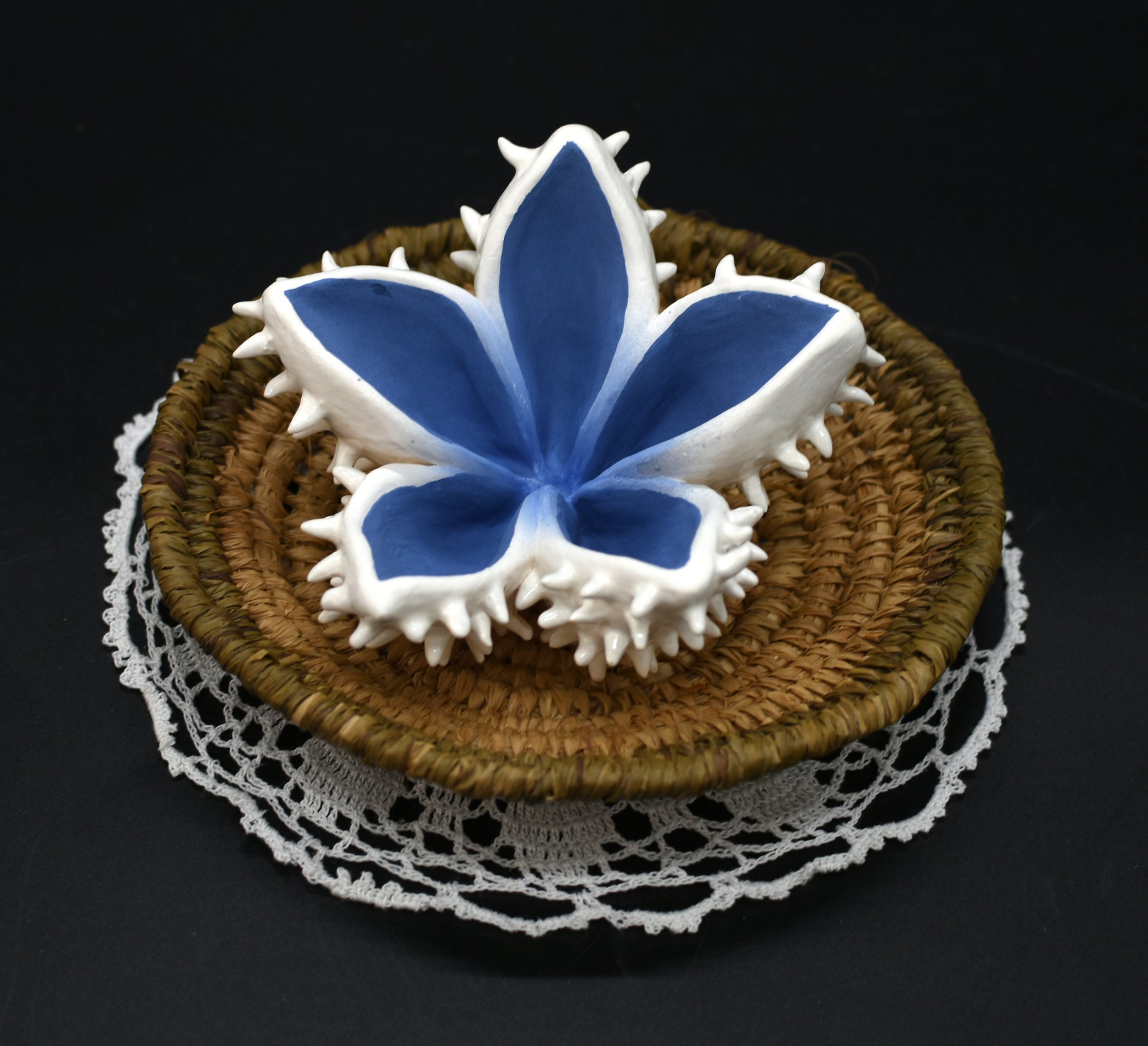
Crow's Ash 2026 - In the early 1800s, botanist Robert Brown travelled around Australia with explorer Matthew Flinders. Brown collected and studied native plants, including the tree later known as Crow's ash. To honour Flinders' role in exploring and mapping Australia, Brown named it Flindersia. Crow’s ash is a large rainforest species native to eastern Australia. Despite its name, it is not a true ash tree. Early European settlers frequently gave Australian trees familiar European names based on superficial similarities, even when the plants were unrelated. "Ash" referred to similarities in the timber or leaf form to European ash trees and "Crow's" likely referred to the glossy black seeds released from the woody seed capsules.
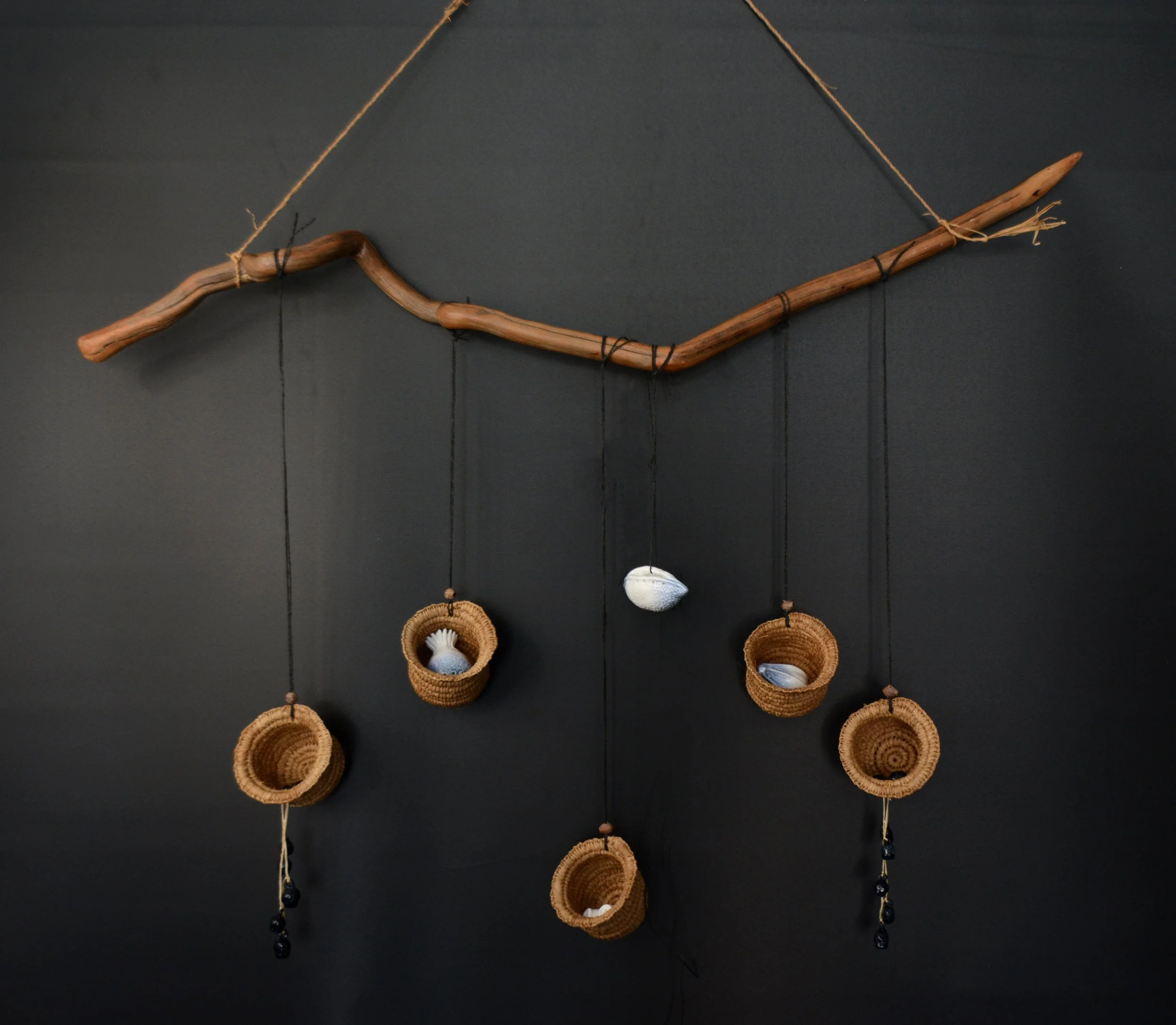
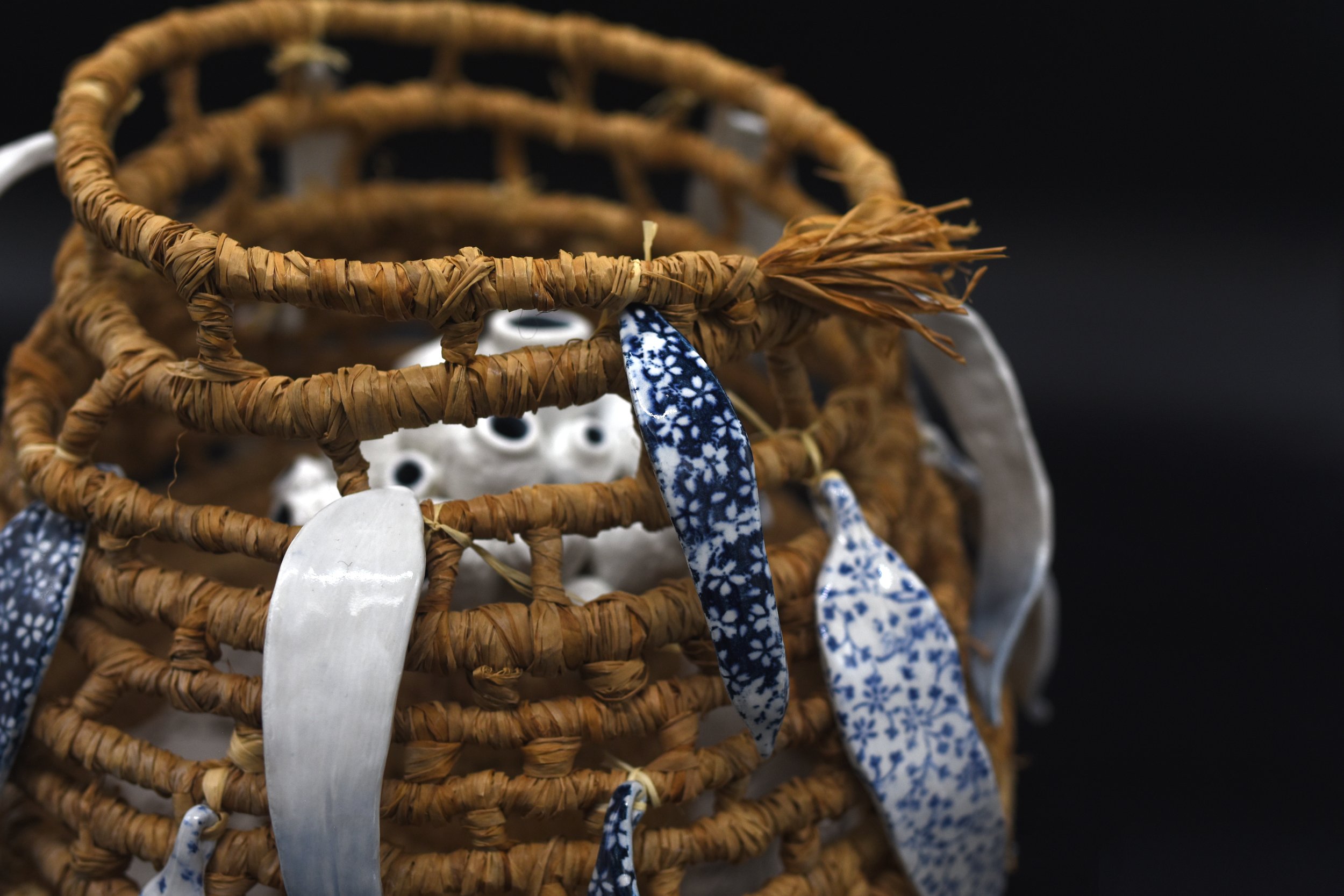
The Things We Carry 2026 - Seed pods are vessels of continuation. They hold the future within them while bearing the marks of place, season, and survival. These white and blue ceramic seeds, become both fragile and enduring, echoing the tension between permanence and loss. The finishes on the seed pods transforms natural forms into objects that resemble ornaments, things to be displayed, and collected, questioning who assigns value to land. The woven elements ground the work in cultural practice, knowledge and care. Aboriginal basket weaving is not only a technique but a way of knowing Country, one that embodies relationships between people, plants, and place, passed through generations.
Strange Splendour 2026 - When early British colonists first encountered Australia's gum trees (eucalypts), many were surprised and puzzled because they looked so different from the forests they knew in Europe. Marcus Clarke later captured the mood of many early settlers in his famous 1876 description of Australia: "A land of strange, savage splendour..." They were given the scientific name Eucalyptus in 1788 by the French botanist Charles Louis L'Héritier de Brutelle, the name coming from the Greek words, ‘eu’ meaning ‘well’ and ‘kalyptos’ meaning ‘covered.’ He chose the name because the flower buds are covered by a cap called an operculum, formed from fused petals or sepals. This cap protects the developing flower and is shed in one piece when the flower opens.
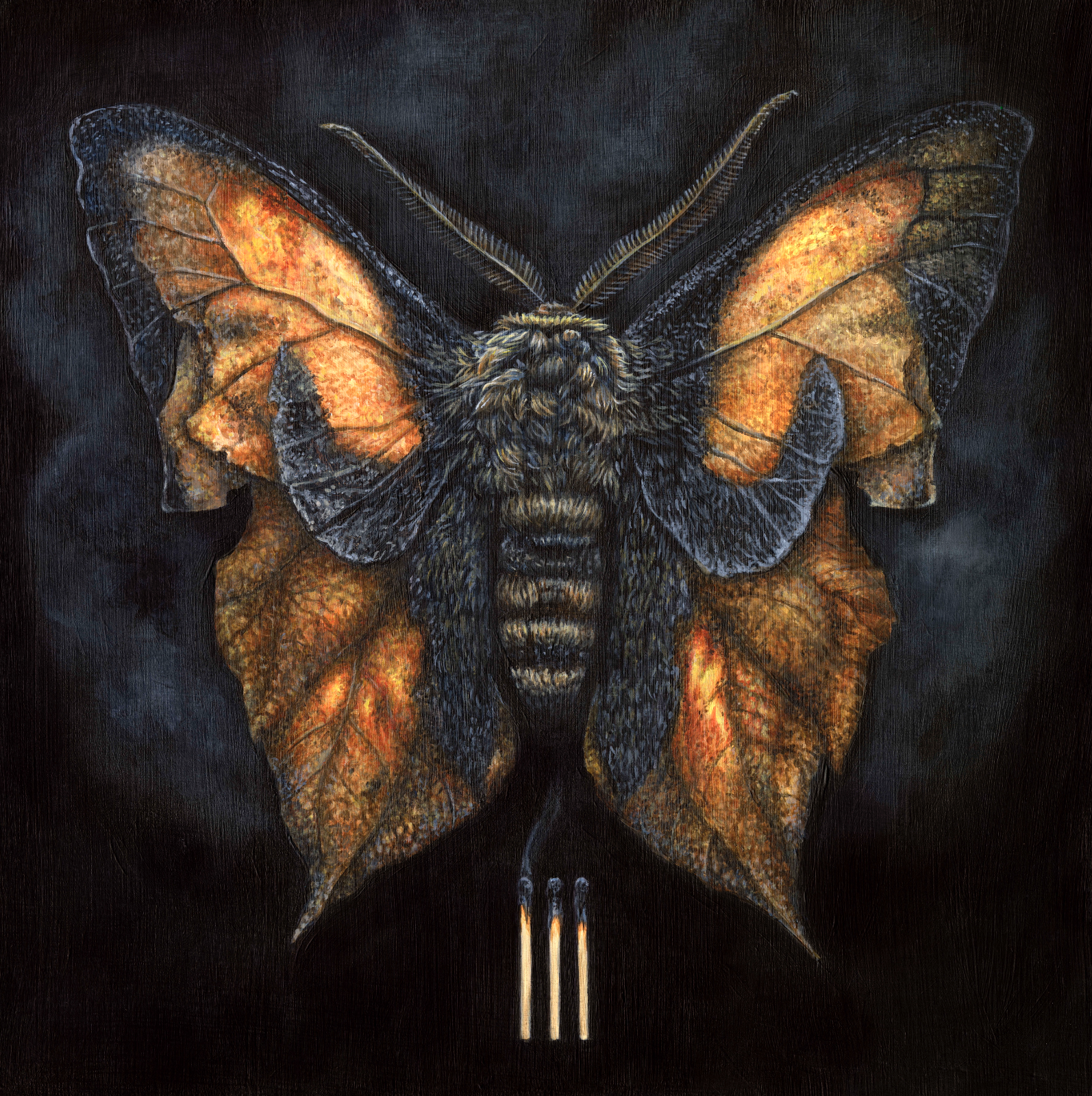
Where There is Smoke 2026 - Fire is no longer only a natural force of renewal but increasingly a symptom of escalation, disruption, and neglect. Each year in Australia 90% of fires attended to in Australia are a result of people’s actions with up to 40% of bushfires being deliberately lit. The match, a commonplace object, highlights how small human actions have the power to impact wider systems of environmental change.
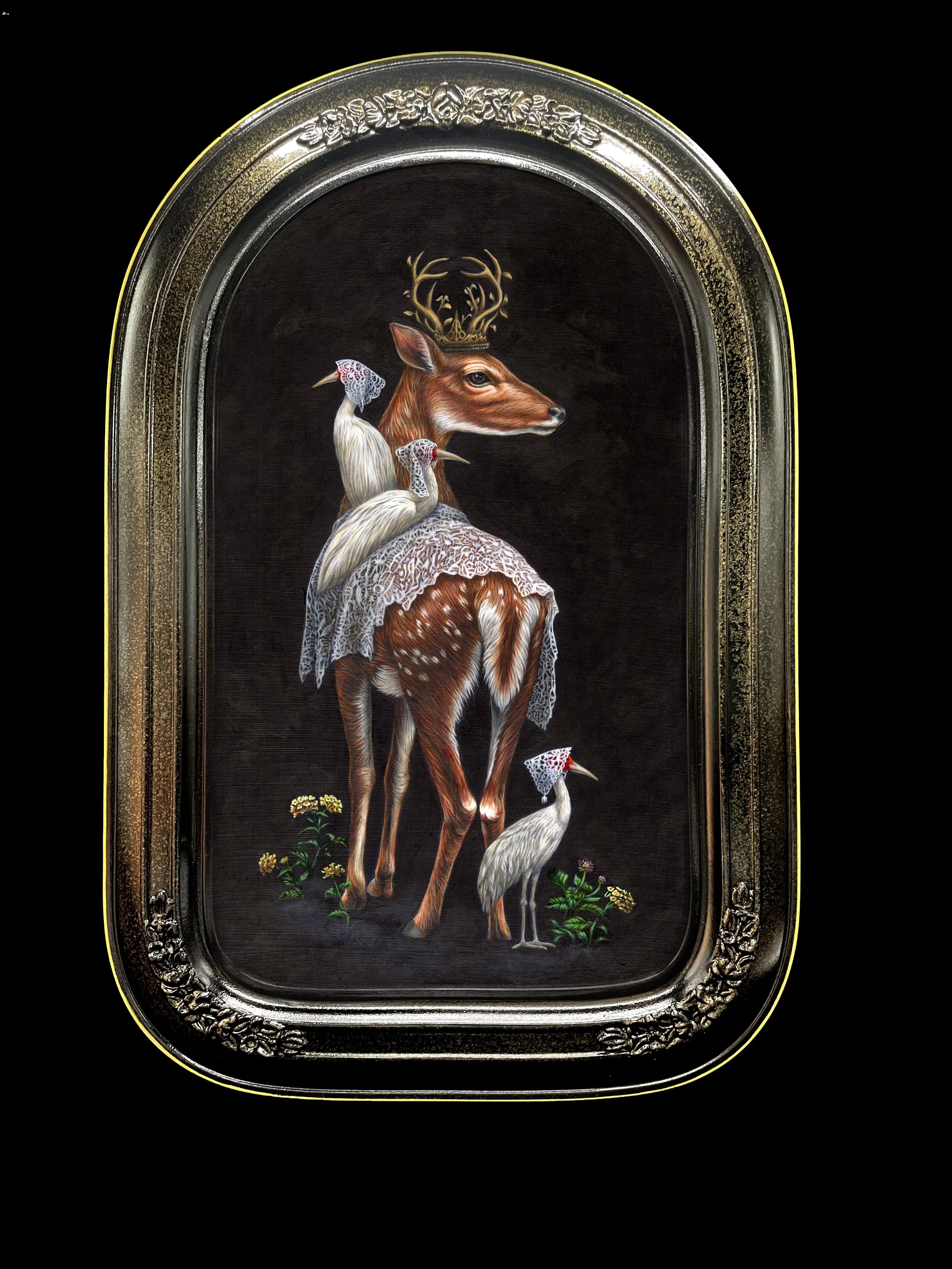
The Queen's Deers 2026 - During the 19th century, wealthy settlers and acclimatisation societies deliberately introduced red deers to Australia so the landscape would resemble Britain and to provide opportunities for recreational hunting. In Queensland, red deer were released in the late 1800s, with some animals reportedly originating from royal and aristocratic deer parks in England. The animals adapted well to local conditions and established wild populations. Over time, escaped and released deer spread beyond their original ranges. Today, red deer are recognised as an invasive species in Queensland. They compete with livestock and native wildlife, damage vegetation, contribute to soil erosion, and assist in spreading weeds. The red deer's presence in the Queensland Coat of Arms celebrates a symbol of British heritage, yet the animal itself embodies the ecological consequences of colonial introductions. Brolgas, Queensland’s native supporting emblem, wear lace doilies, suggesting the obscuring effects of colonial narratives that have reshaped the landscape.
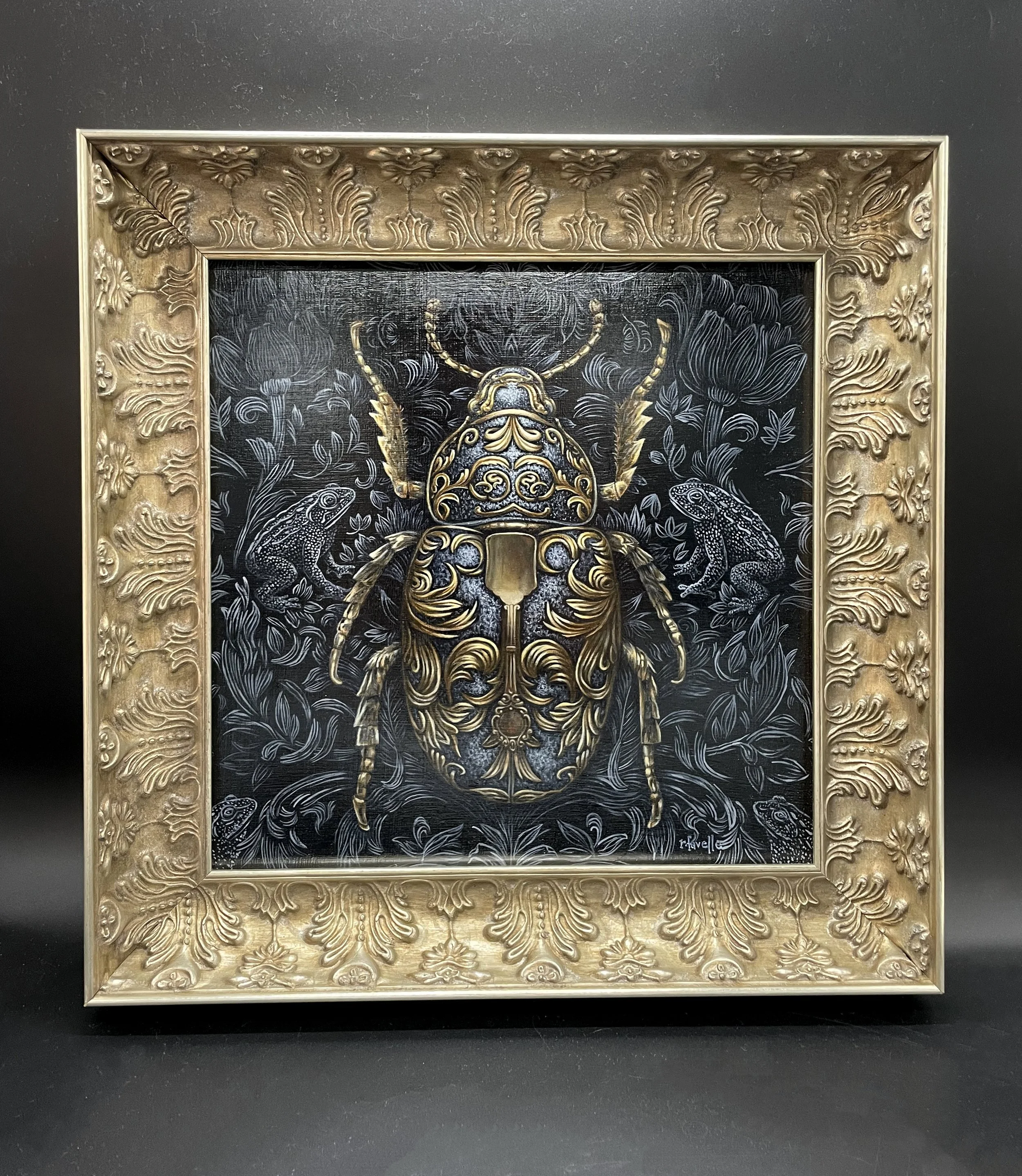
A Spoonful of Sugar 2026 - Spoonful of Sugar explores the unintended consequences of our desire for pleasure and convenience. Around 3000 cane toads were introduced into Australia in 1935 from Hawaii in an attempt to control native cane beetles that were damaging sugar cane crops. Unable to climb the cane stalks, the toads failed to control the beetles and instead became an invasive species with devastating effects on native ecosystems. The work contrasts the sweetness of agricultural industry with the bitterness of failed biological control.
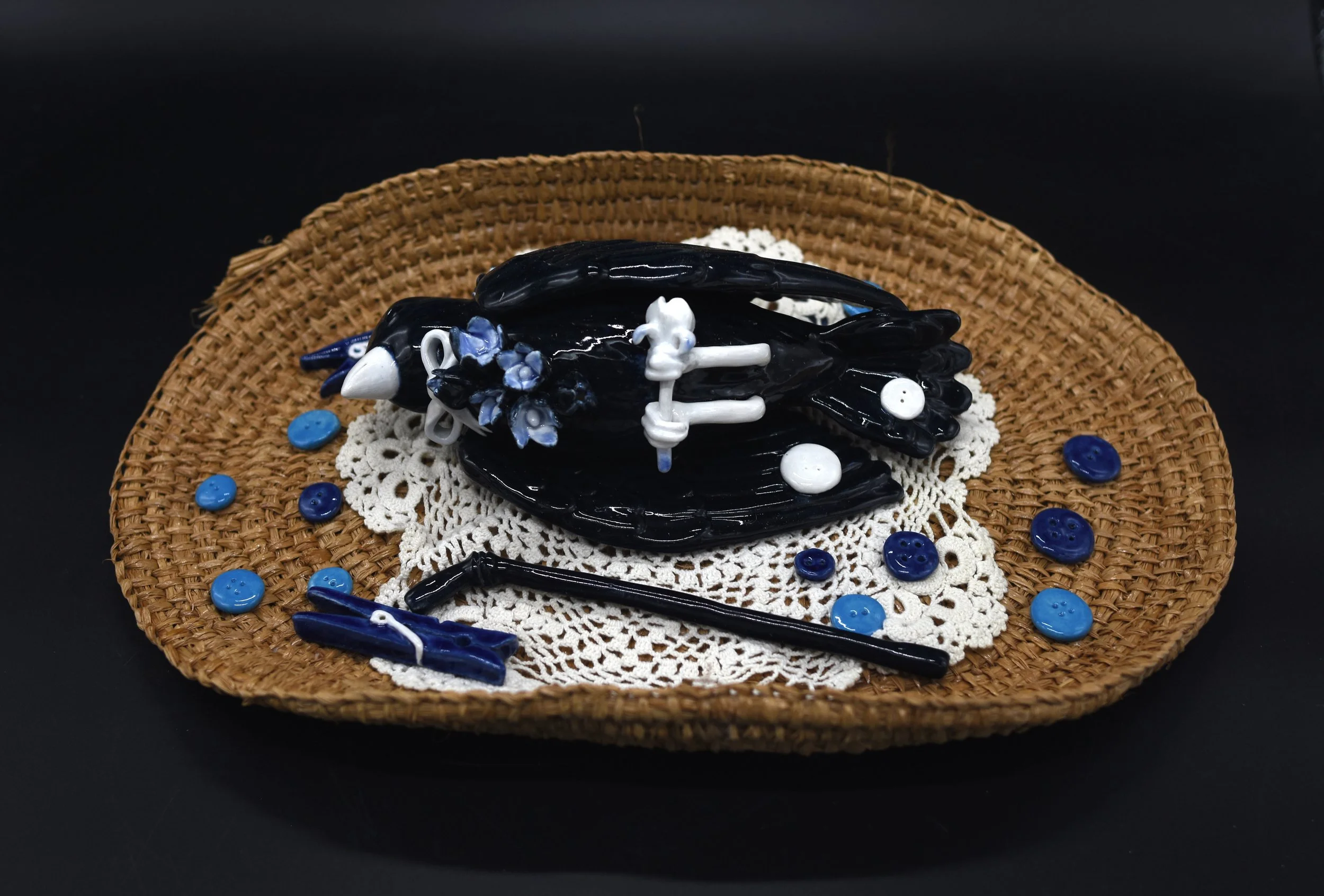
Something Borrowed... 2026 - The satin bowerbird is endemic to eastern Australia. Early European naturalists were puzzled by the bowerbird, believing their intricate twig structures were nests. Researchers eventually discovered they were courtship structures for mating. Before European colonization, males primarily decorated with blue feathers, flowers, berries, and shells. As towns and farms expanded, they began incorporating human-made blue objects into their displays. Unlike some Australian birds that suffered catastrophic population losses, satin bowerbirds adapted relatively well to modified landscapes, including gardens, orchards, and forest edges. The bowerbird is a metaphor for the ecological footprint we leave behind on the land and nature’s absorption of humankind’s choices. It survives by absorbing our materials and adapting to our modified landscapes, but the dead bird in this sculpture reminds us that this relationship is not necessarily harmonious.
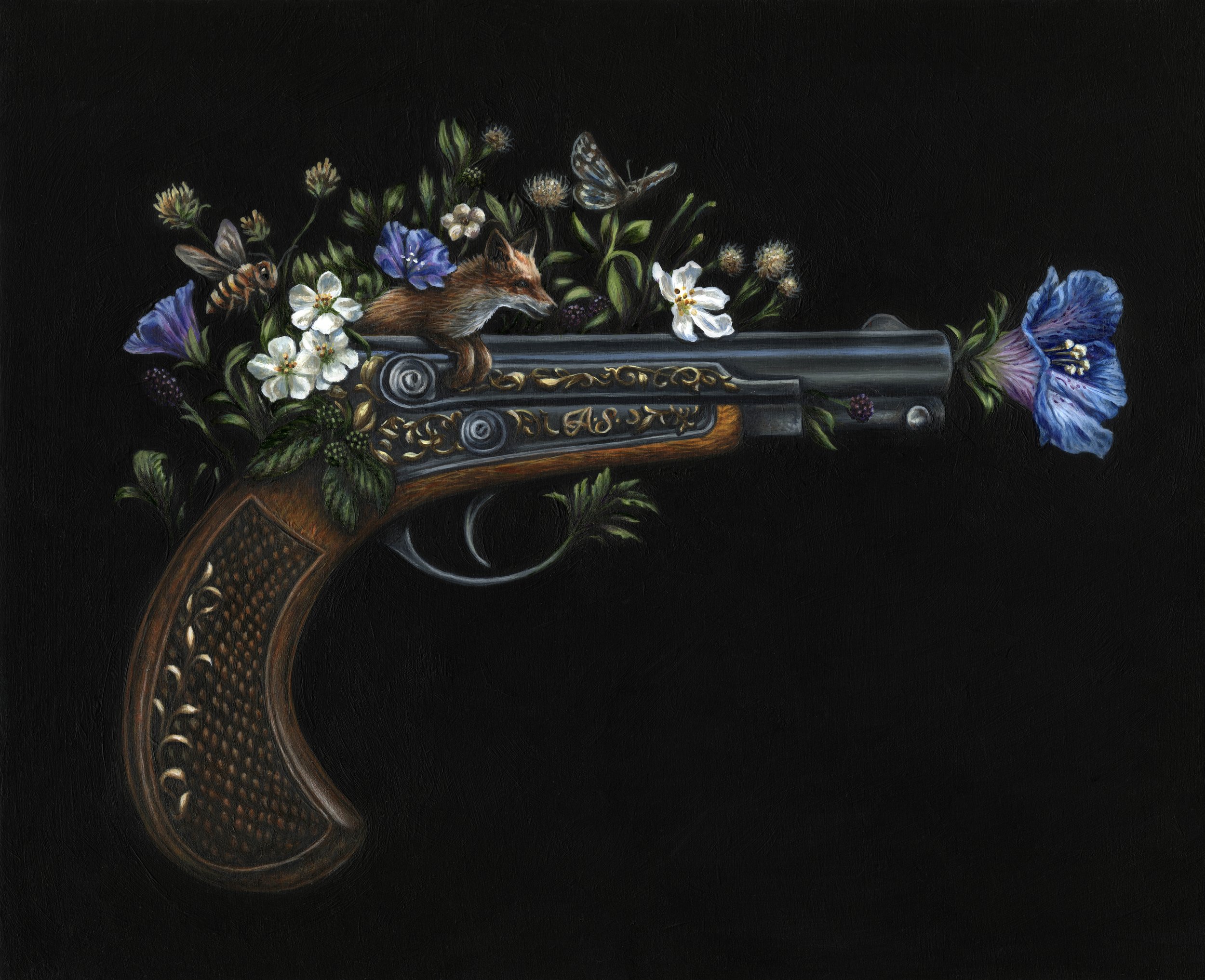
Weapons of Mass Destruction 1 2026 - Weapons of Mass Destruction is a diptych exploring the unintended consequences of human intervention in the environment. Weeds and introduced species emerge from the guns, transforming weapons of violence into vessels for ecological disruption. The guns suggest that the weapons we leave behind are not always made of bullets or steel. Here, nature becomes both the target and the weapon, asking us to consider whether the greatest threat to our environment is not what we fire, but the choices we make.
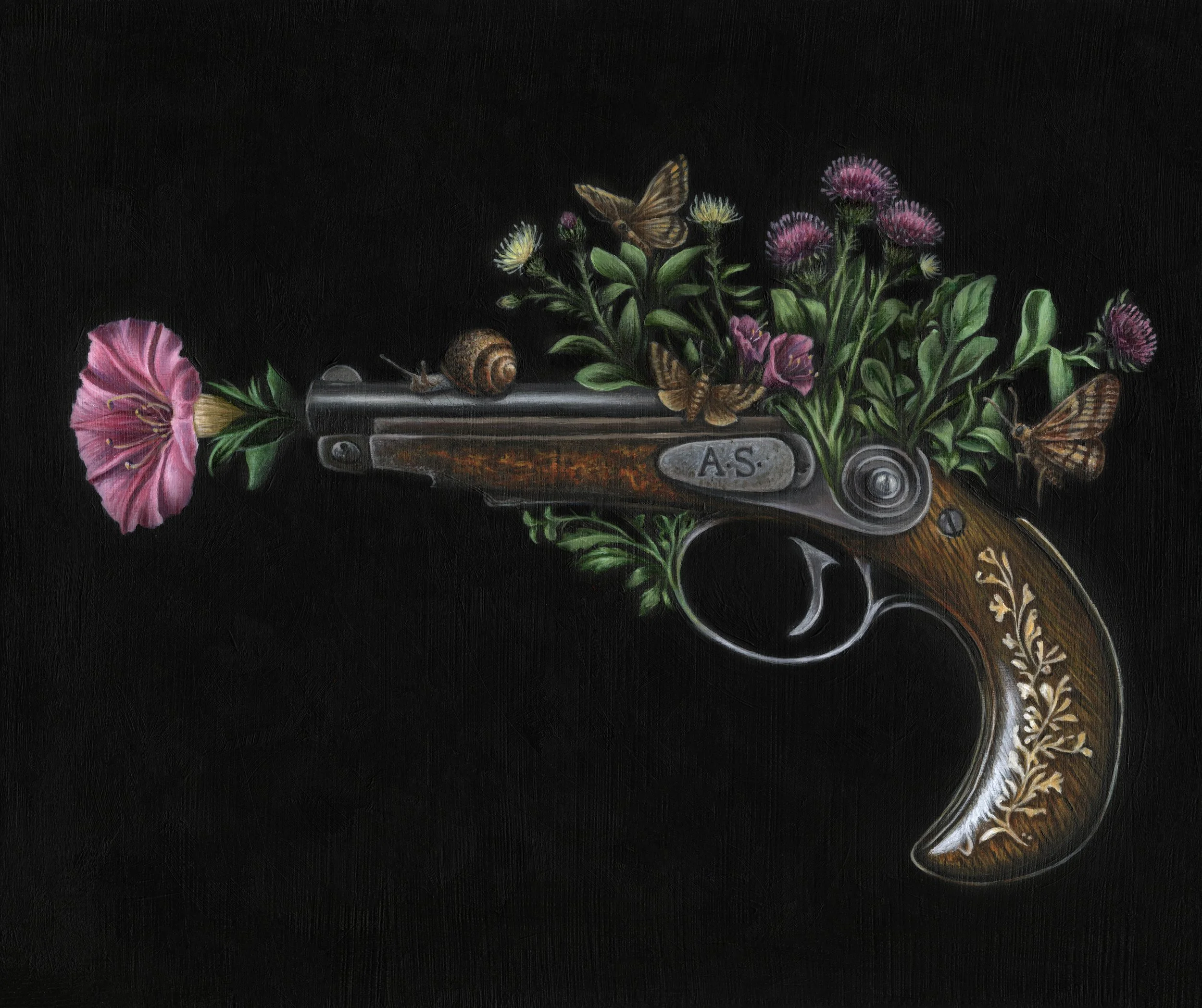
Weapons of Mass Destruction 2 2026 - Weapons of Mass Destruction is a diptych exploring the unintended consequences of human intervention in the environment. Weeds and introduced species emerge from the guns, transforming weapons of violence into vessels for ecological disruption. The guns suggest that the weapons we leave behind are not always made of bullets or steel. Here, nature becomes both the target and the weapon, asking us to consider whether the greatest threat to our environment is not what we fire, but the choices we make.

There's No Place Like Home 2026 - Inspired by William Morris’ textiles, the work references Thomas Austin of Barwon Park, a prominent member of the acclimatisation movement in the 1850s and 60s who introduced European animals and birds to recreate a sense of “home” in the colonies. These deliberate introductions, driven by familiarity and sentimentality, profoundly altered Australia’s ecosystems and contributed to the decline of native species. The painting questions the desire to reshape one landscape into the image of another for the purpose of environmental nostalgia.
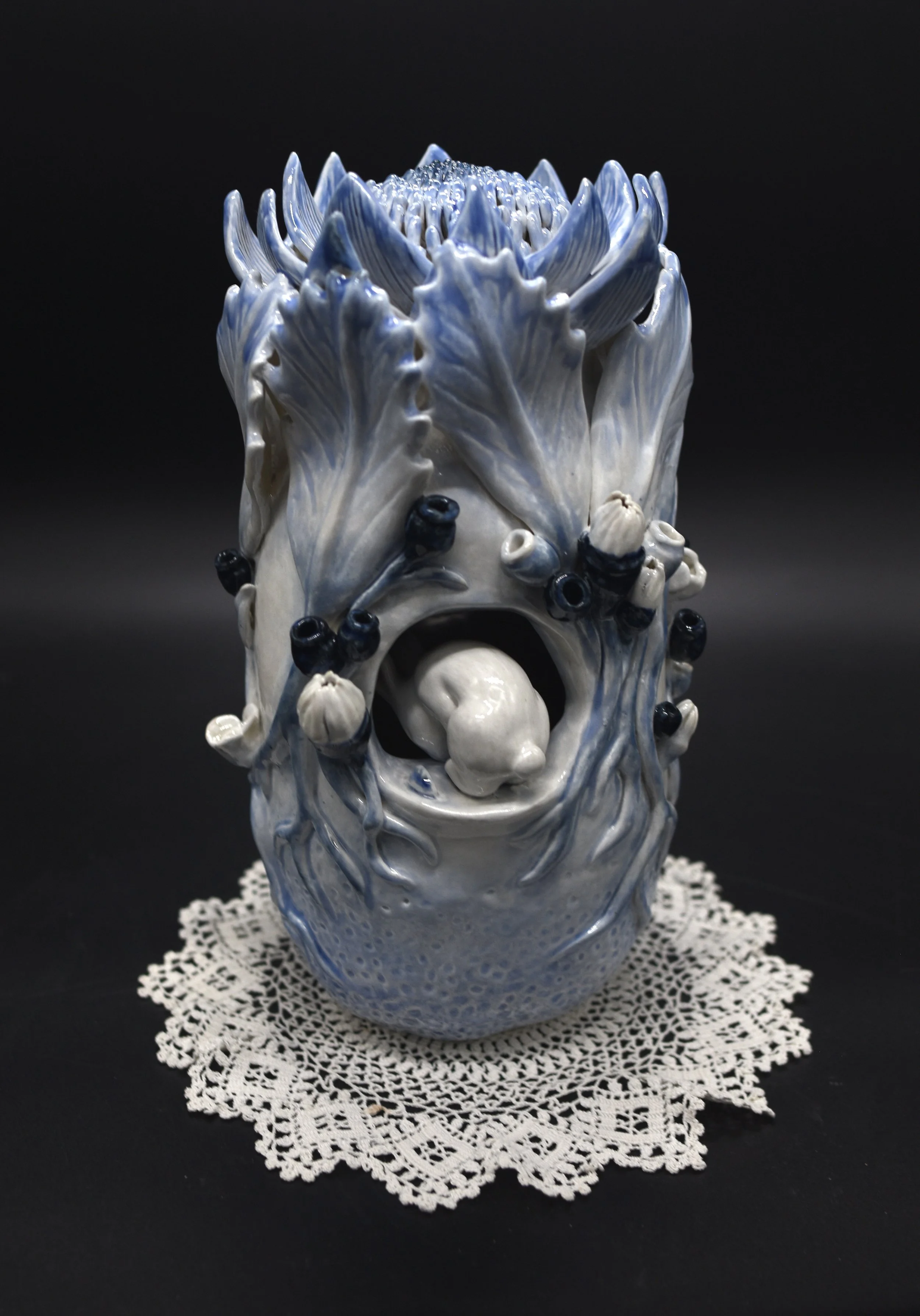
While They Were Sleeping 2026 - While They Were Sleeping explores the introduction and rapid spread of European rabbits in Australia. On Christmas Day 1859, Thomas Austin released wild rabbits on his estate, Barwon Park, near Winchelsea in Victoria, intending to establish game for hunting. Within just seven years, more than 14,000 rabbits had been shot on the property. Released as a reminder of home, they found an environment with abundant food, suitable habitat and relatively few effective predators. Their population expanded rapidly, eventually spreading across much of Australia and causing extensive damage to vegetation, agriculture and native ecosystems. The forms suggest a landscape that appears beautiful and settled above ground, while beneath it something is quietly taking hold.
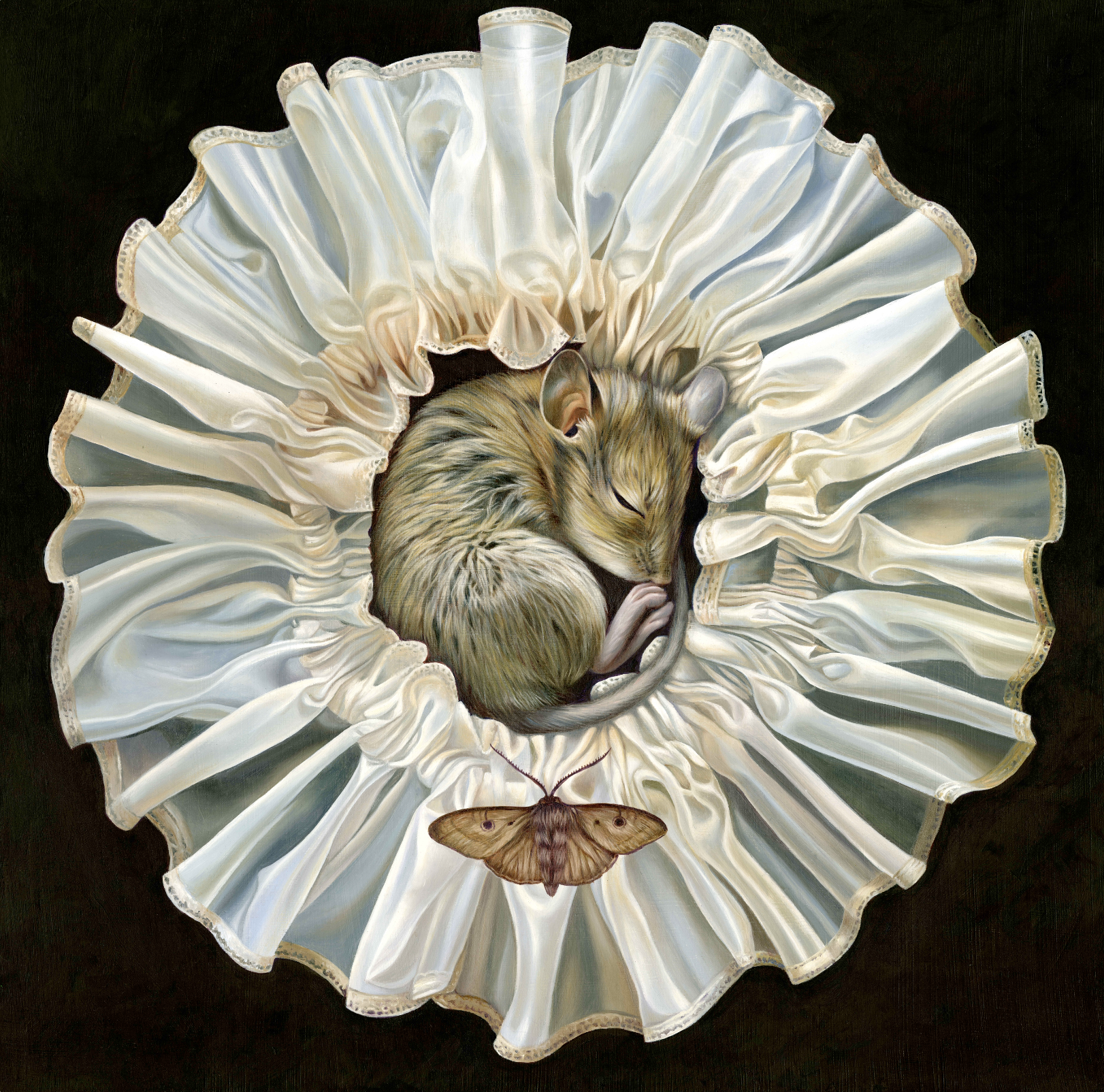
Silent Echo 2026 - Since 1788, more than 100 native species have been documented as extinct, giving Australia the worse record of mammal loss on the planet. While 100 species are formally listed, scientists warn of a ‘silent extinction’ of countless insects, snails and plants that disappeared without ever been recorded. ‘Silent Echo’ highlights a profound contradiction; an echo, a sound we must listen for, it can’t be heard if we fail to attune ourselves to it. This reflects the broader failure to listen to and understand the natural world. By juxtaposing the fragile ruff with the sleeping mouse and a bogong moth, I aim to highlight the dissonance between human expectations and environmental realities.
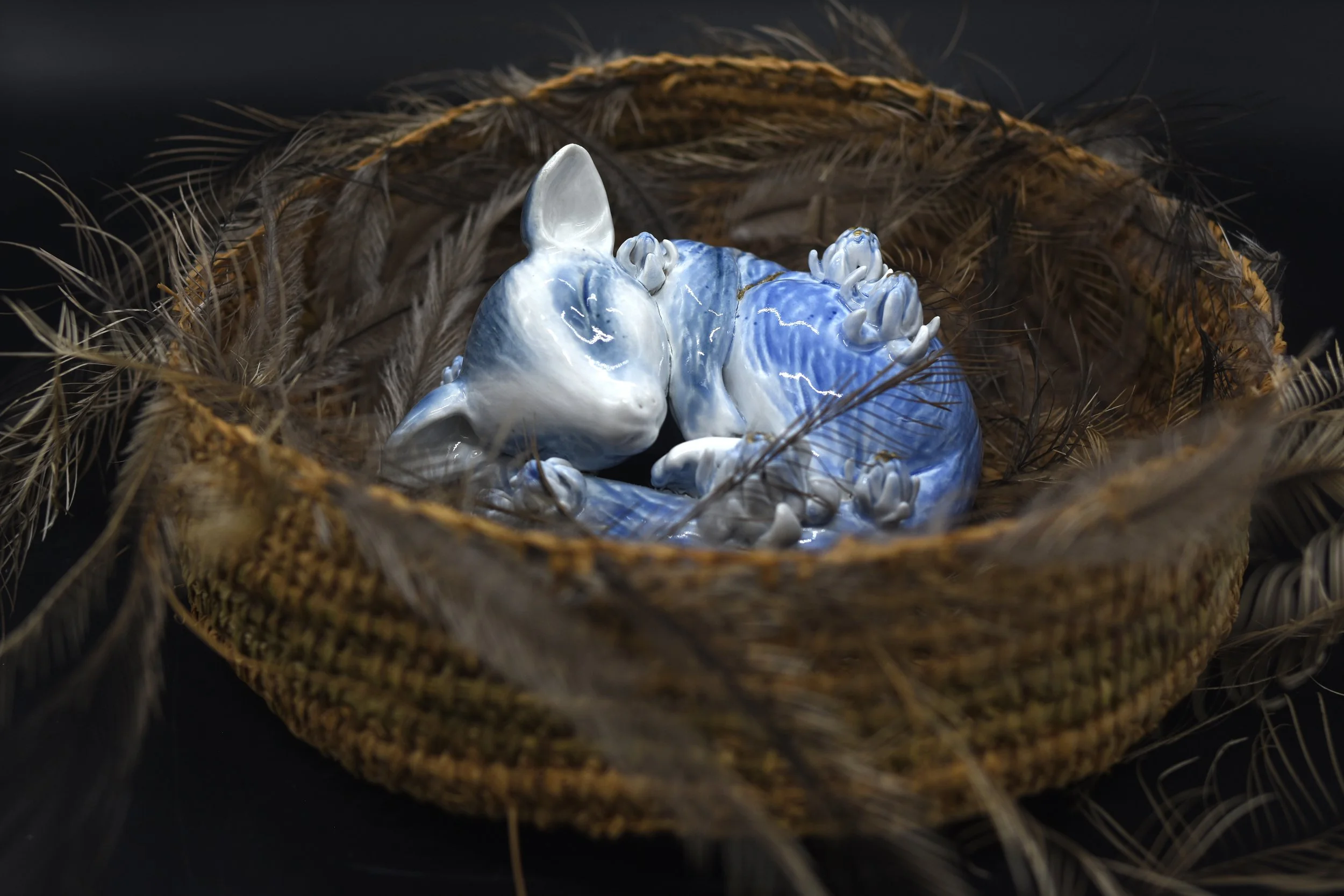
Native Invasive 2026 - For many years people assumed that sugar gliders were native to Tasmania because they were widespread. Around 1835 records suggest that sugar gliders were brought to Tasmania as pets from Victoria. They eventually escaped captivity and established themselves in the wild. Sugar gliders prey on the eggs, chicks, and even adult females of the critically endangered Swift parrot, while the parrots are nesting. This predation is considered one of the species' greatest threats, and at present the Tasmanian Government is investigating management strategies to reduce the impact.
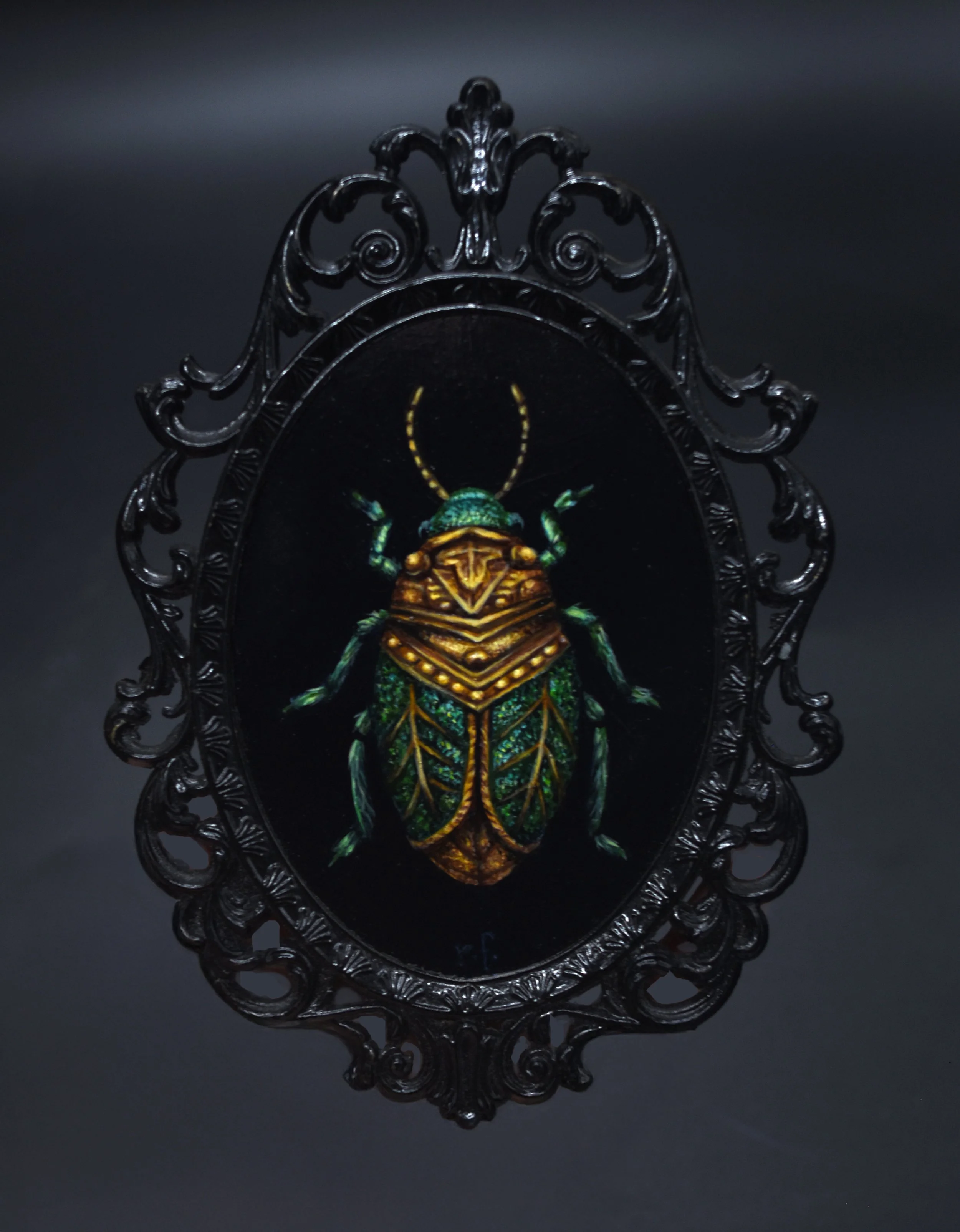
Battle Armour Bugs - Elm Leaf Beetle Battle Armour Bugs imagines introduced insects as an occupying force, not intentionally destructive, but participants in a conflict created by human movement. Together, the five insects span almost two centuries of human-mediated introduction and ecological change in Australia. Look beyond the intricate surface of these creatures and consider the invisible warfare taking place within Australia's ecosystem, a battle in which there are no clear winners.
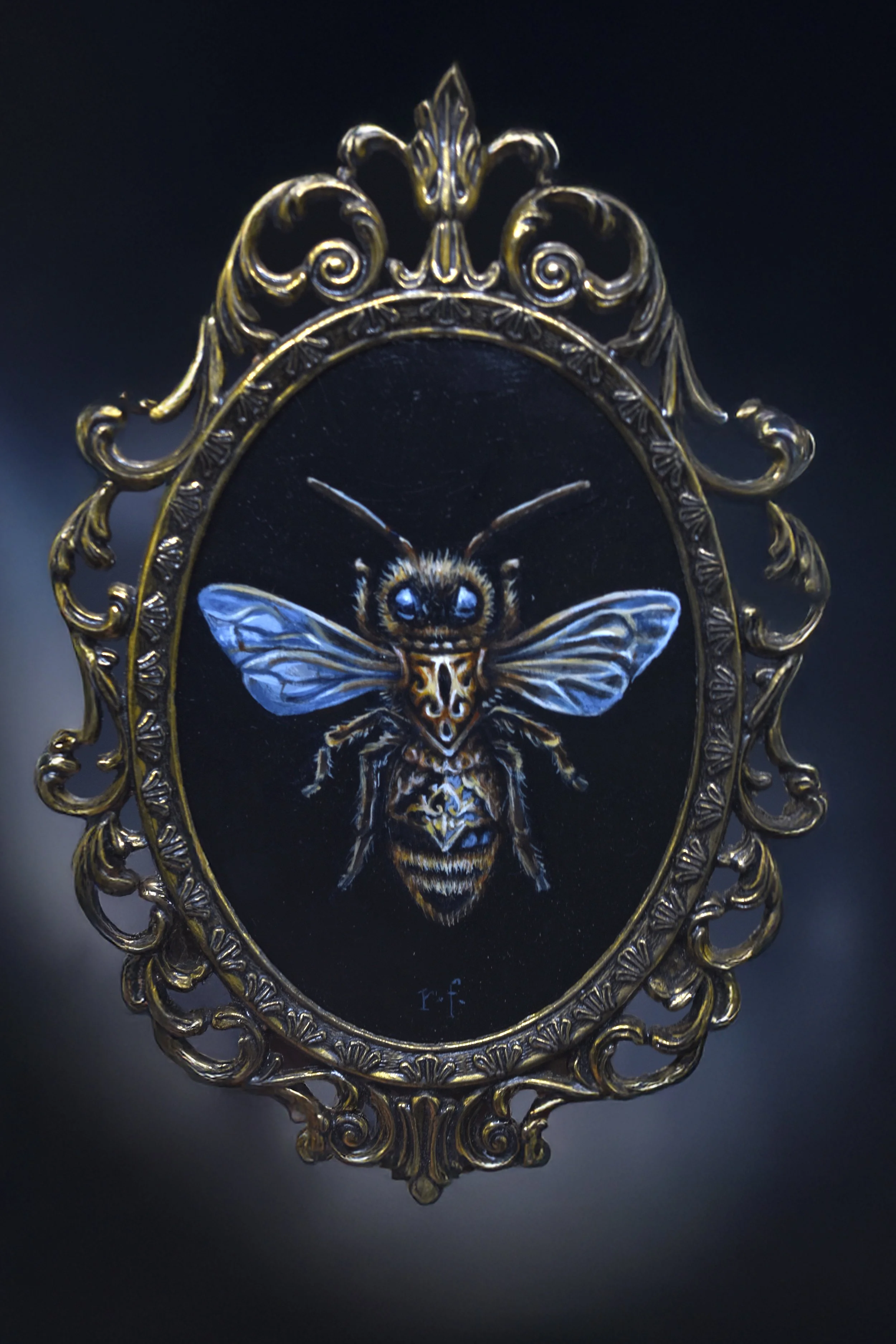
Battle Armour Bugs - European Honey Bee Battle Armour Bugs imagines introduced insects as an occupying force, not intentionally destructive, but participants in a conflict created by human movement. Together, the five insects span almost two centuries of human-mediated introduction and ecological change in Australia. Look beyond the intricate surface of these creatures and consider the invisible warfare taking place within Australia's ecosystem, a battle in which there are no clear winners.
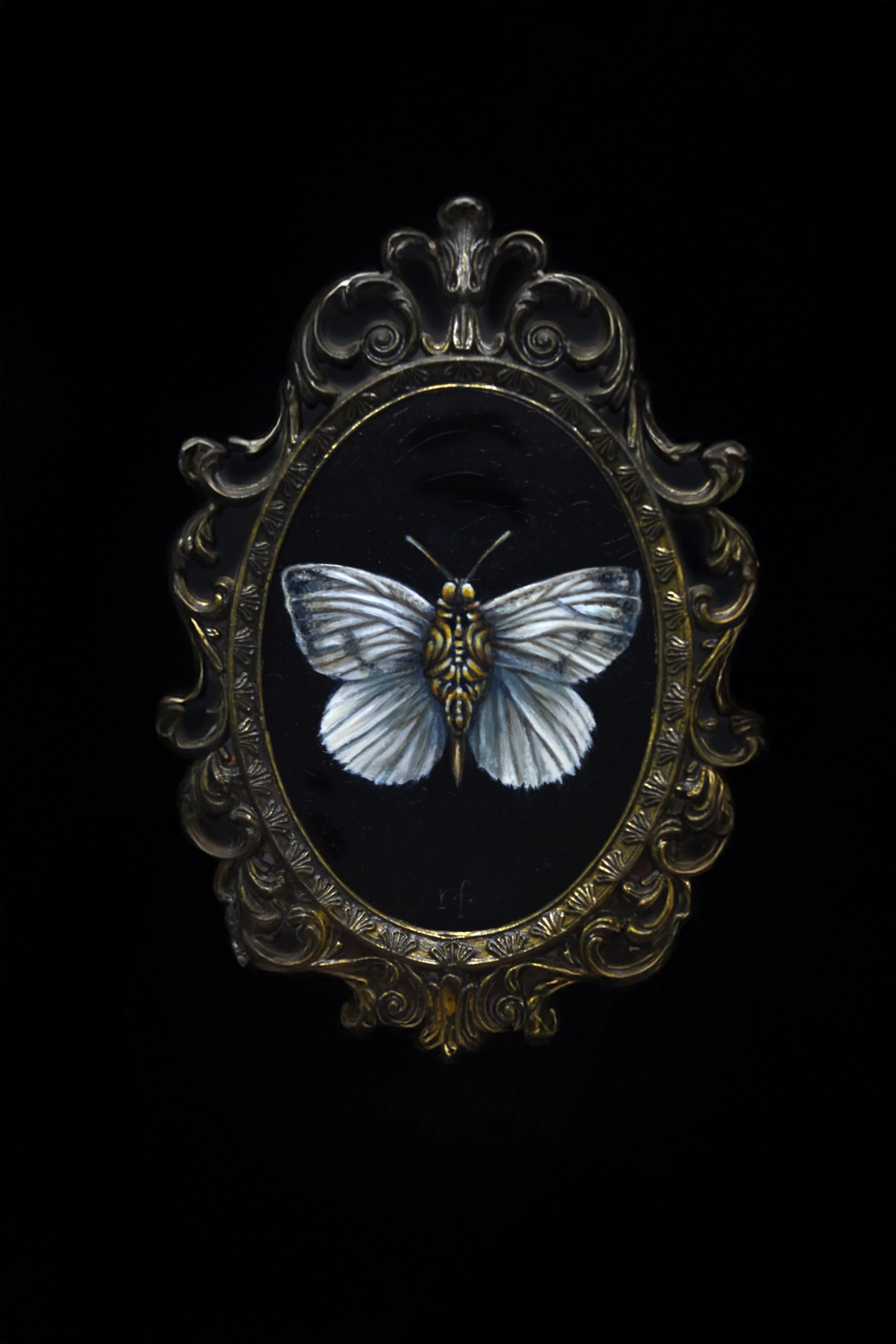
Battle Armour Bugs - Cabbage Moth 2026 - Battle Armour Bugs imagines introduced insects as an occupying force, not intentionally destructive, but participants in a conflict created by human movement. Together, the five insects span almost two centuries of human-mediated introduction and ecological change in Australia. Look beyond the intricate surface of these creatures and consider the invisible warfare taking place within Australia's ecosystem, a battle in which there are no clear winners.
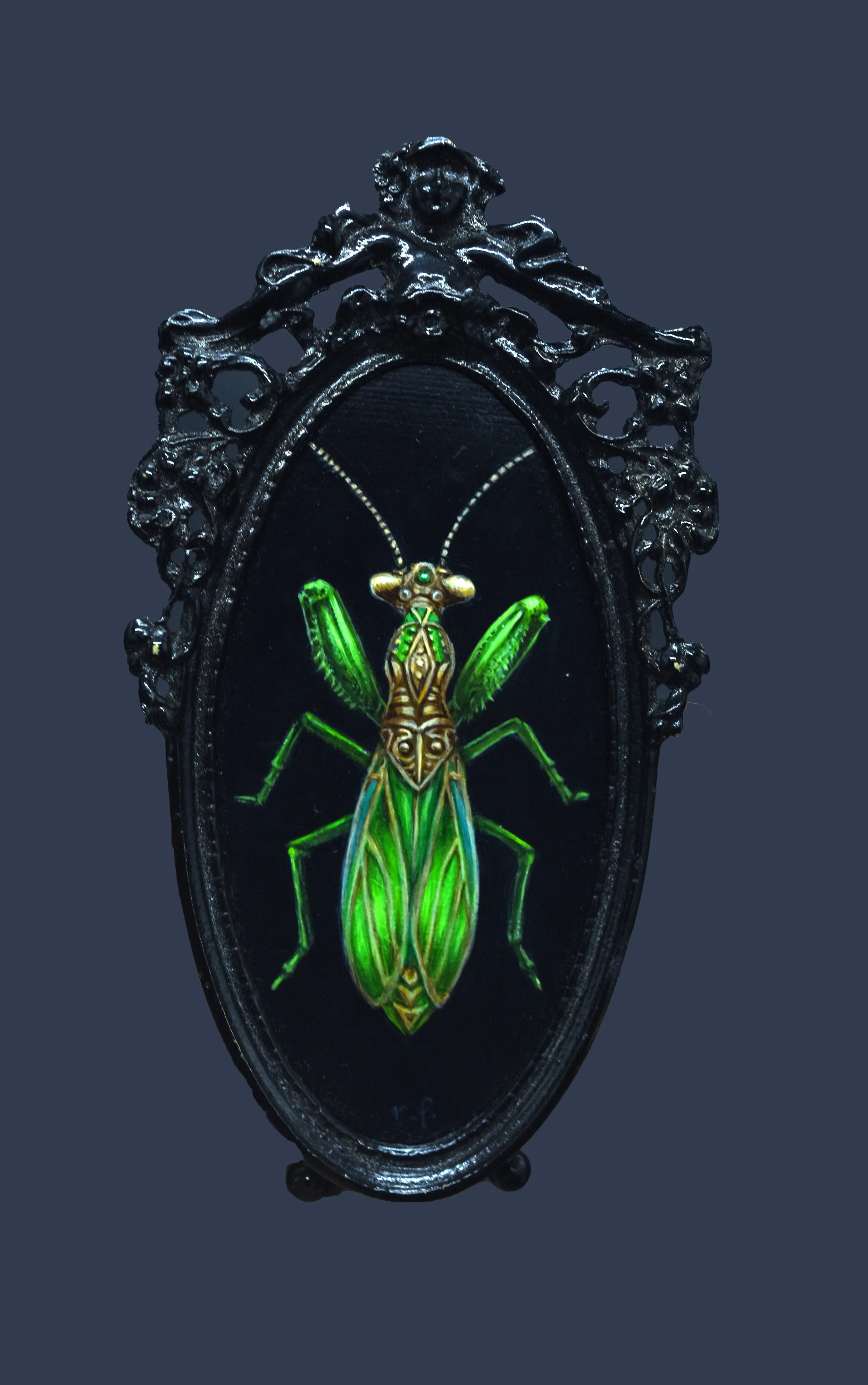
Battle Armour Bugs - Preying Mantis 2026 - Battle Armour Bugs imagines introduced insects as an occupying force, not intentionally destructive, but participants in a conflict created by human movement. Together, the five insects span almost two centuries of human-mediated introduction and ecological change in Australia. Look beyond the intricate surface of these creatures and consider the invisible warfare taking place within Australia's ecosystem, a battle in which there are no clear winners.
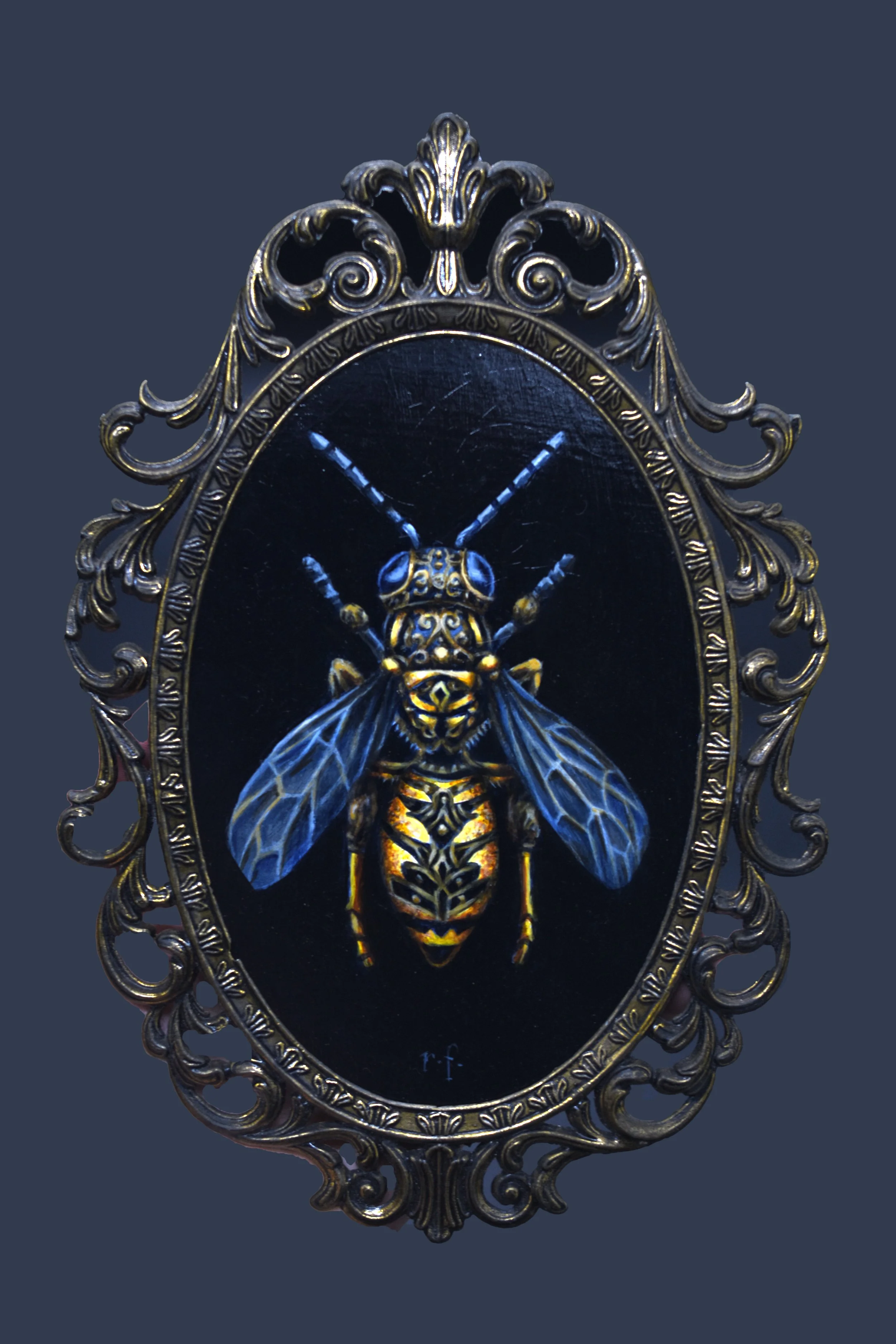
Battle Armour Bugs - European Wasp 2026 - Battle Armour Bugs imagines introduced insects as an occupying force, not intentionally destructive, but participants in a conflict created by human movement. Together, the five insects span almost two centuries of human-mediated introduction and ecological change in Australia. Look beyond the intricate surface of these creatures and consider the invisible warfare taking place within Australia's ecosystem, a battle in which there are no clear winners.
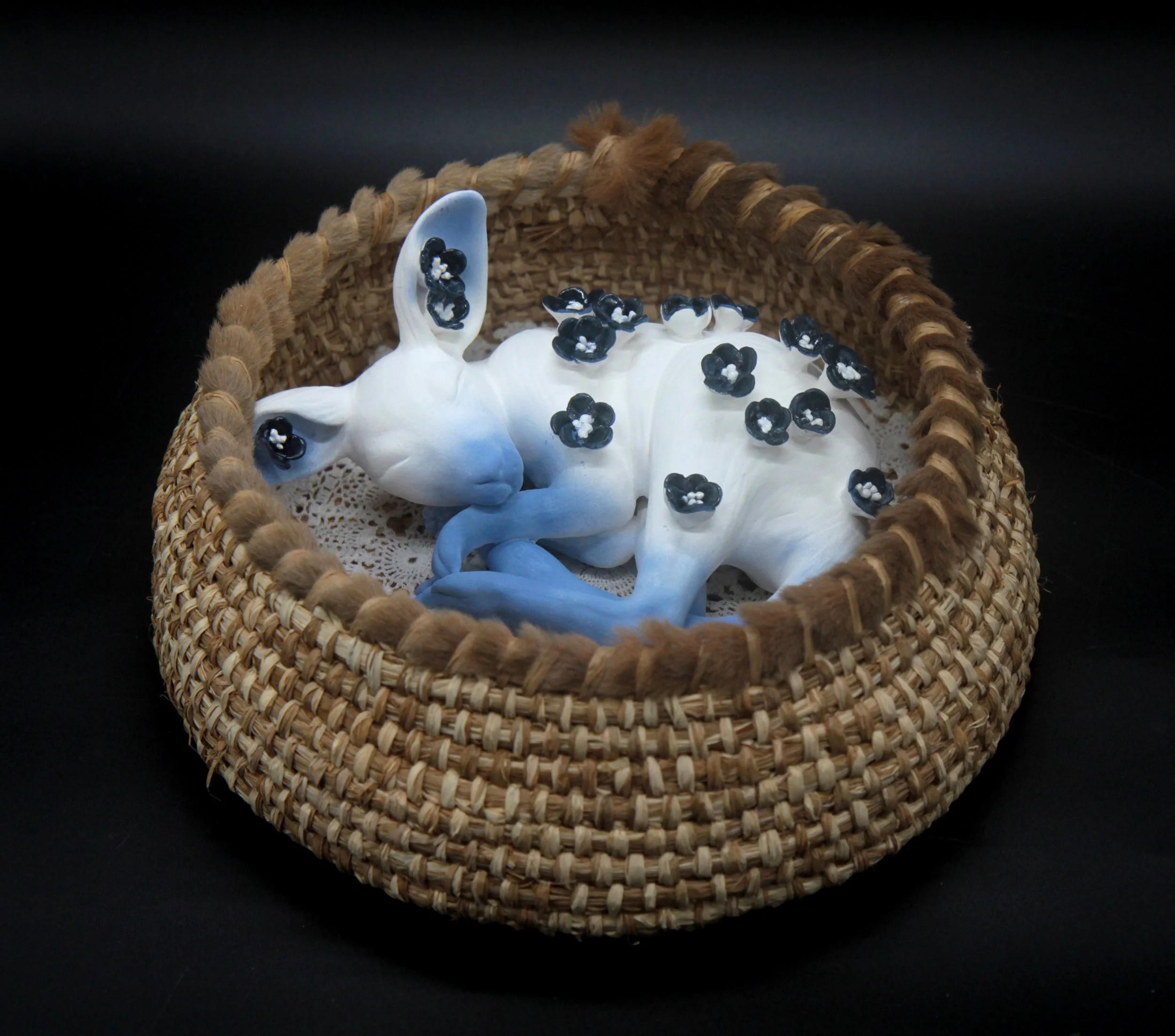
Gangurru 2026 - The word kangaroo is not of English invention but was adapted from the Guugu Yimithirr word, ‘gangurru’, referring to eastern grey kangaroos. Their relationship was based on mutual exchange rather than ownership. When Europeans first encountered kangaroos in 1770 during First voyage of James Cook, they were unlike any animal known in Europe. Early explorers treated them as scientific curiosities. The clearing of forests and creating permanent water sources benefited some kangaroo species, allowing populations to increase in certain areas. As a result, many settlers began viewing kangaroos as agricultural pests. Growing up in the country, I have memories of the neighbouring farmers who would shoot kangaroos for sport but more fundamentally to protect their crops.
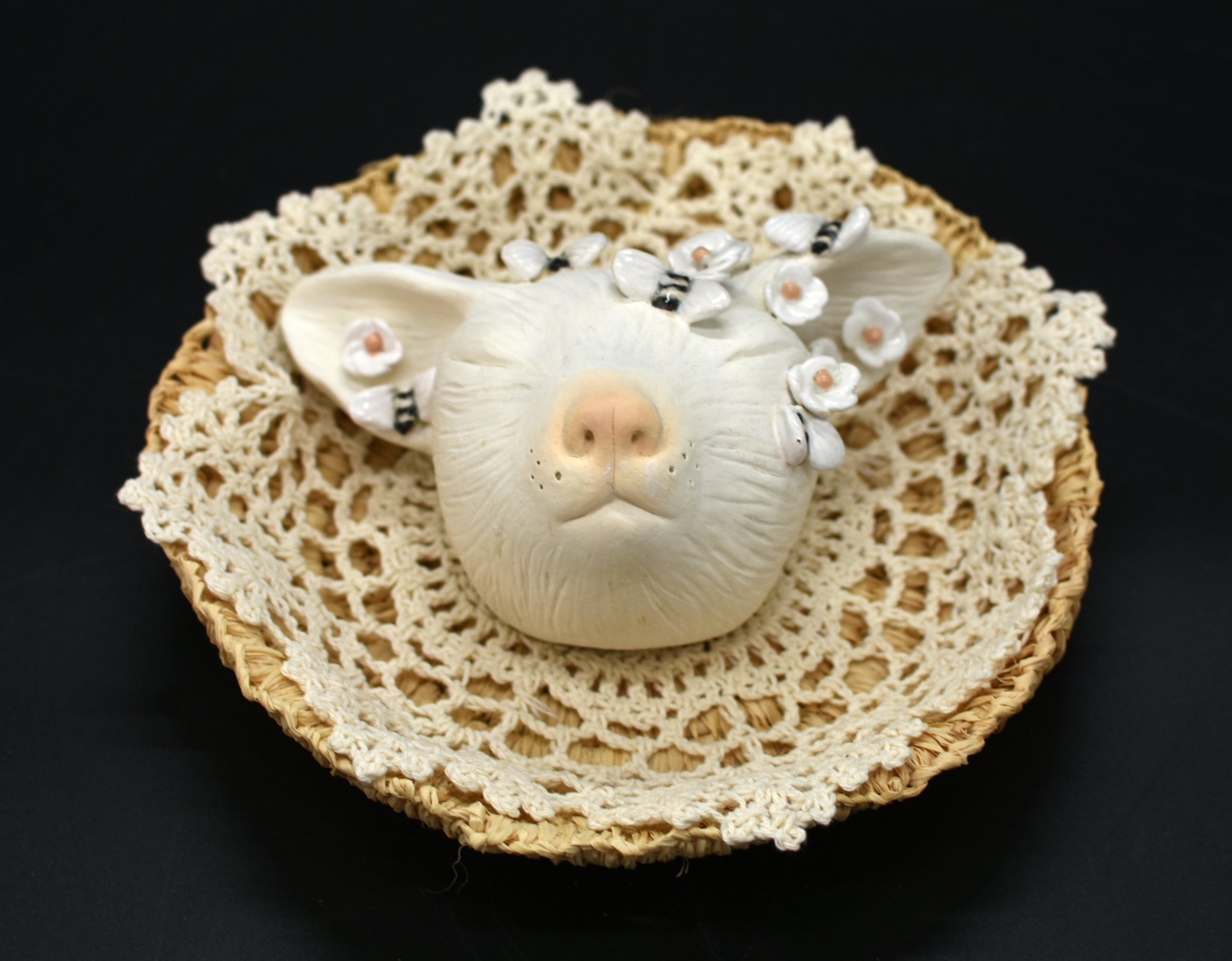
Let Sleeping Dogs Lie 2026 - The dingo is an enduring presence in the Australian landscape, adapting to an environment continually reshaped by humans, climate, fire, agriculture and development. Since colonisation, dingoes have been displaced, persecuted and controlled, particularly as European pastoralism transformed the landscape and positioned the dingo as a threat to livestock. Let Sleeping Dogs Lie considers the dingo as both survivor and witness to these changes. Its sleeping form suggests stillness and resilience, while the title questions our impulse to control what we perceive as a threat
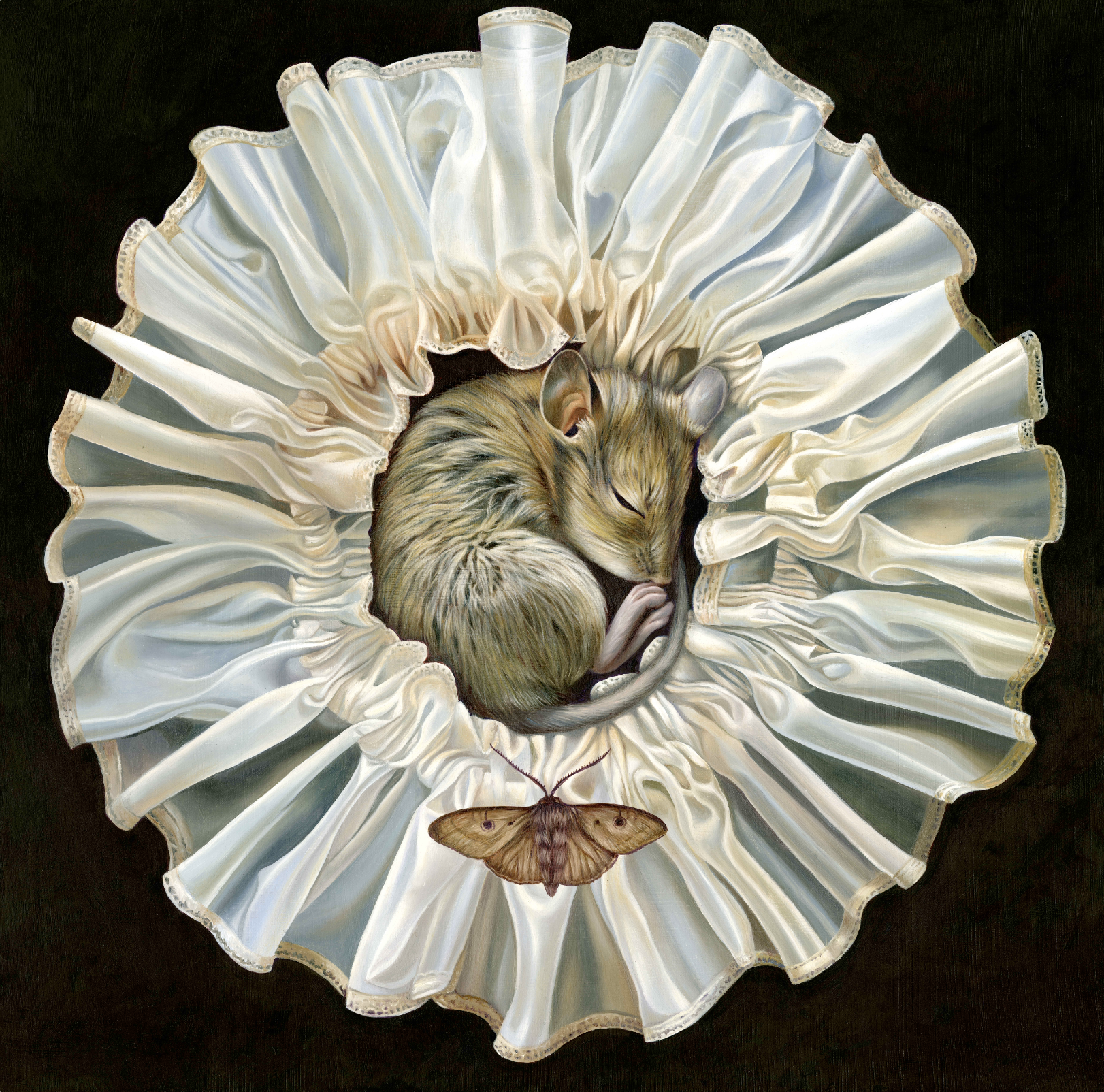
Silent Echo 2024 - Since 1788, more than 100 native species have been documented as extinct, giving Australia the worse record of mammal loss on the planet. While 100 species are formally listed, scientists warn of a ‘silent extinction’ of countless insects, snails and plants that disappeared without ever been recorded. ‘Silent Echo’ highlights a profound contradiction; an echo, a sound we must listen for, it can’t be heard if we fail to attune ourselves to it. This reflects the broader failure to listen to and understand the natural world. By juxtaposing the fragile ruff with the sleeping mouse and a bogong moth, I aim to highlight the dissonance between human expectations and environmental realities.
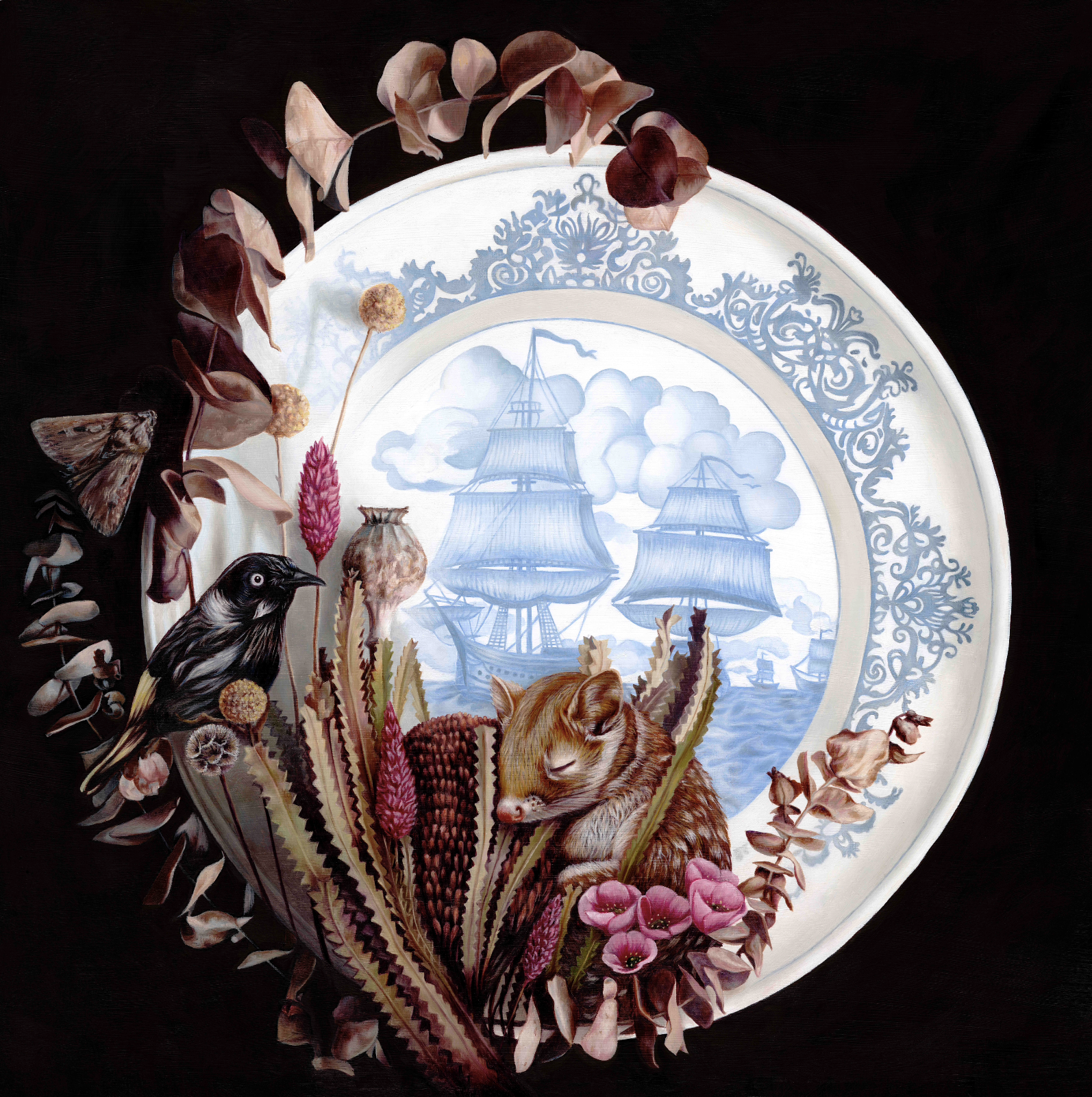
The Vanishing 2024 - The Vanishing is a narrative of loss and resilience. Woven into the intricate details of a willow china plate is a scene depicting the arrival of the First Fleet, a pivotal moment marking the onset of irreversible ecological transformation. Imagery of endangered species, which adorn the plate, serve as an allegory for the systematic erasure of Aboriginal culture and the relentless exploitation of natural resources. The Vanishing is a testament to the resilience of Australia's native flora and fauna, even in the face of adversity. Yet, it also is a sobering reminder of the urgent need for conservation efforts and a reckoning with the ongoing impacts of colonisation. Through this artwork, I invite viewers to reflect on the interconnectedness of history, ecology, and identity, and to contemplate the profound implications of human intervention on the fragile balance of our planet.
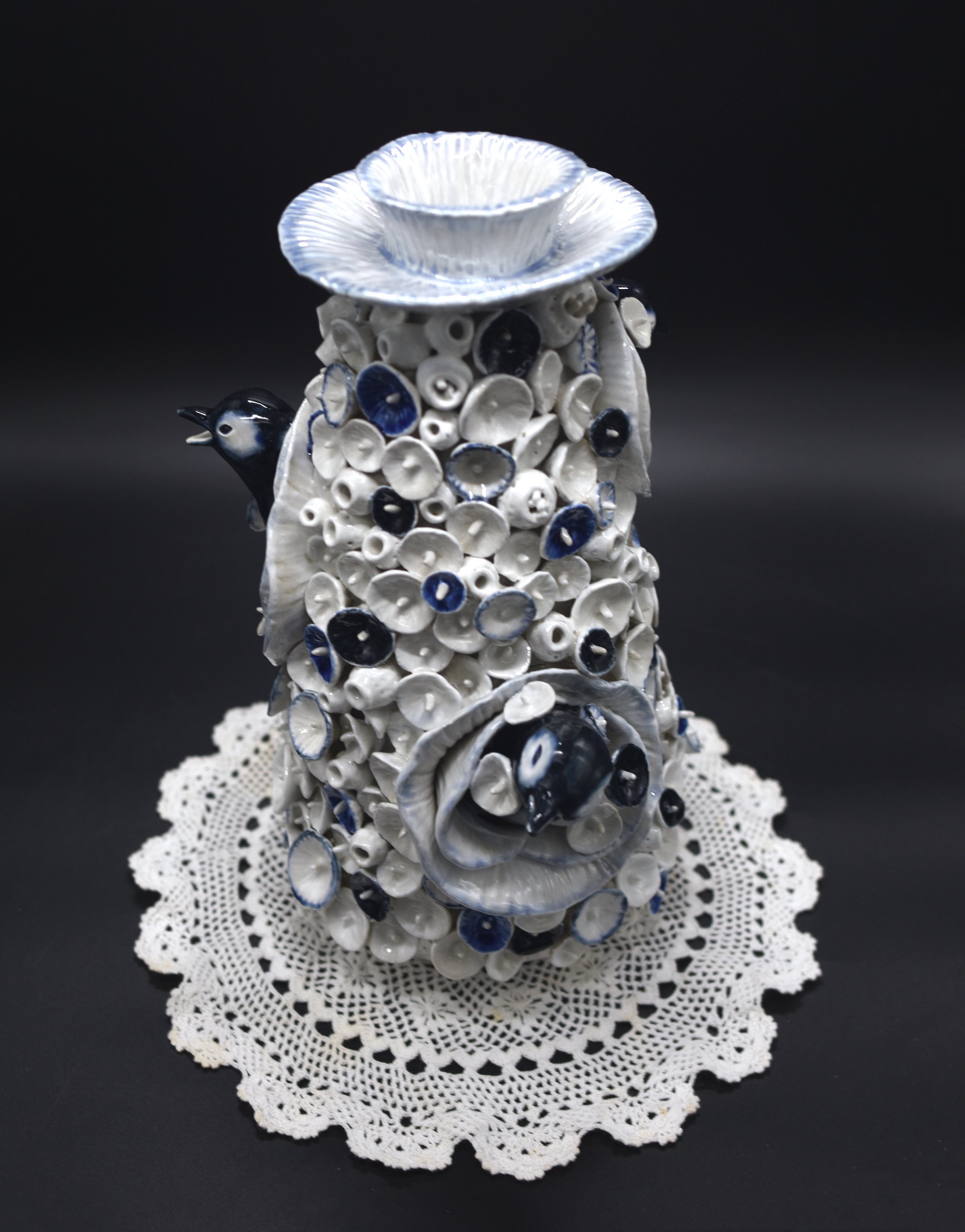
The Last Song 2026 - With fewer than 350 remaining in the wild, the Regent Honeyeater is critically endangered and increasingly threatened by the loss of flowering eucalyptus woodlands cleared by human settlement. This work focuses on the loss of the honeyeater’s song. Young birds learn their mating calls from adult males, but as populations decline, they have fewer opportunities to learn the correct song. Some imitate other birds instead, reducing their chances of finding a mate and reproducing. The vessel depicts three honeyeaters where the song becomes broken between generations. What becomes lost when a species loses not only its habitat, but also its voice?
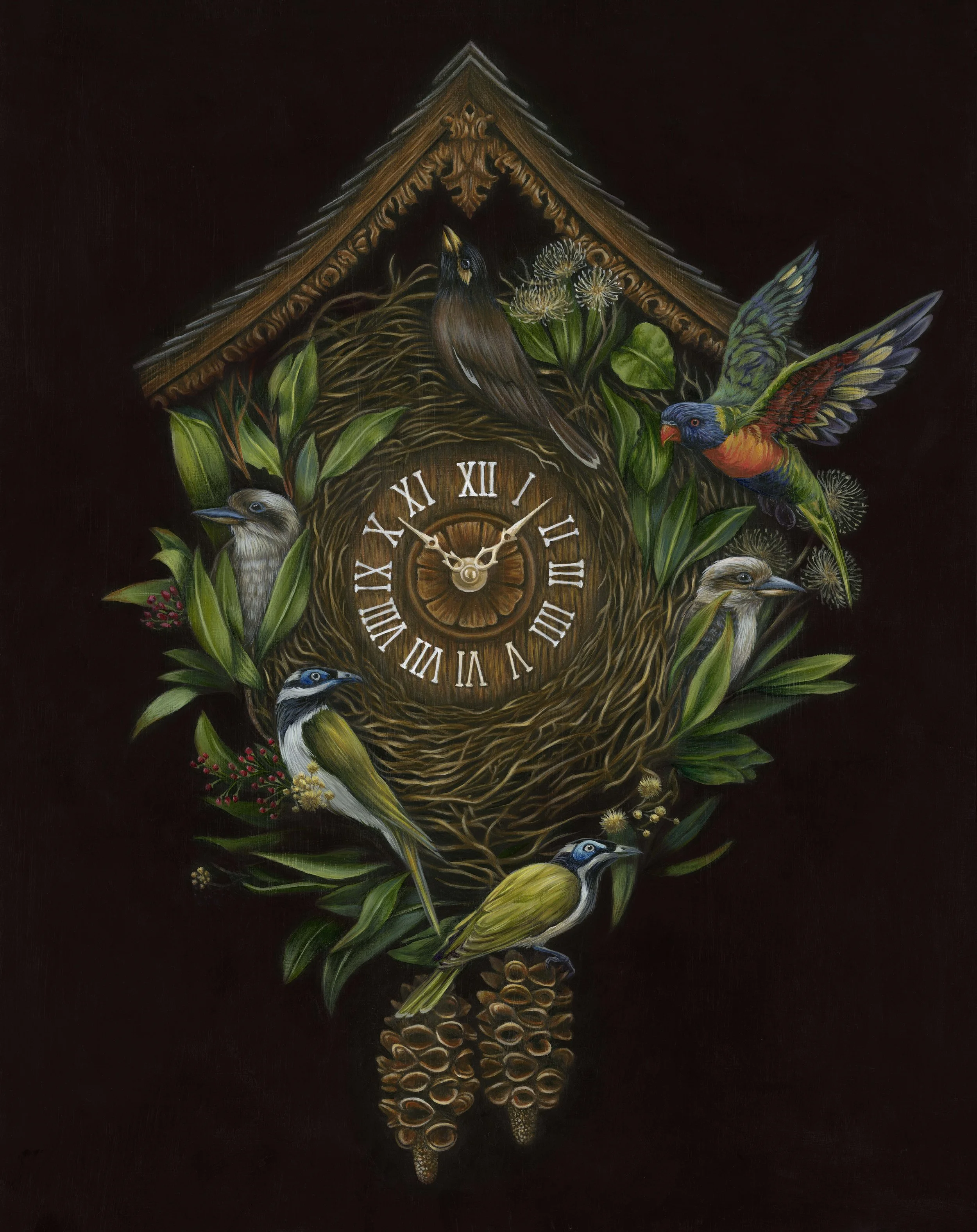
The Hollow 2026 - The Indian myna sits at the top of a cuckoo clock, occupying and controlling the hollow of a tree. The cuckoo clock which seeks to imitate nature, in this case blurs the boundary between nature and manufactured environments. It becomes a metaphor for time, human intervention, and ecological change. Indian mynas are highly competitive birds around tree hollows which are valuable nesting sites. They physically attack other birds and purposely damage nesting materials to take over these hollows. The myna’s presence speaks to nature’s shifting hierarchies, where introduced species claim spaces once belonging to others.

Tales of Dissonance 2025 - Tale of Dissonance is a symbolic portrait that reimagines the presence of Elizabeth Gould, a highly respected 19th-century bird artist and illustrator. She produced hundreds of detailed bird illustrations including Charles Darwin’s Beagle voyage publications, though much of her contribution was historically overshadowed by her husband’s fame. Her illustrations were essential to works such as The Birds of Australia. The Gouldian Finch was named by British ornithologist John Gould in honour of his wife who passed at the age of 37, most likely from complications related to childbirth.